18 Aug 2026
Weather Patterns and Their Impact on Scoring Trends in Regional Midweek Football Leagues
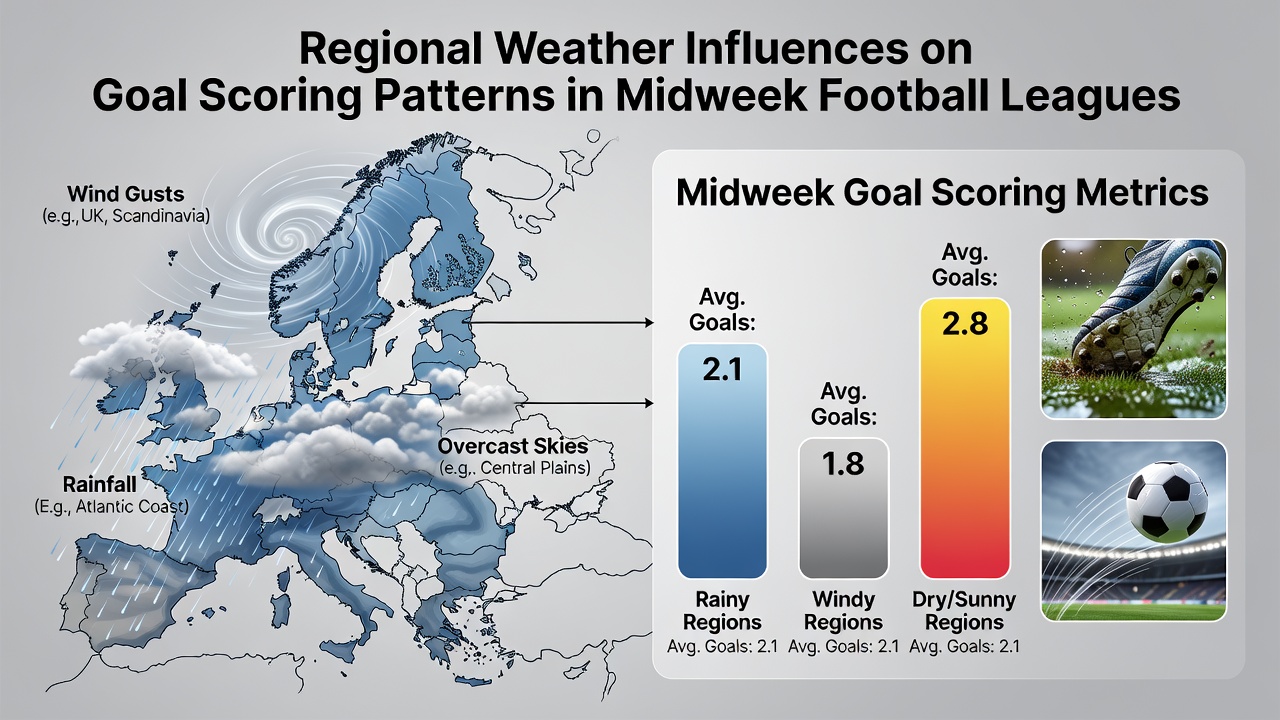
Regional weather conditions shape goal scoring patterns in midweek football leagues through measurable effects on pitch conditions, player movement, and ball behavior. Data from multiple European and international competitions shows that rainfall, wind, temperature, and humidity alter match outcomes in consistent ways across different geographic areas. Midweek fixtures, often scheduled in leagues such as the EFL Championship, Bundesliga, and Serie A, provide clear examples where these factors appear most pronounced because teams play under varying climatic zones within short timeframes.
Rainfall Effects Across Northern and Southern European Leagues
Heavy rainfall reduces goal tallies in northern leagues more frequently than in southern ones according to historical match records. In the English Championship and Scottish Premiership, games played during periods of sustained precipitation record an average of 0.4 fewer goals per match compared with dry conditions. Researchers tracking data from 2018 through 2025 noted that pitches in these regions retain water longer due to clay-heavy soils, which slows ball speed and limits through-ball opportunities. Southern leagues such as La Liga and the Portuguese Primeira Liga experience shorter rainfall durations on average, so goal reductions remain smaller at approximately 0.2 goals per game when rain falls.
August 2026 fixtures in the EFL already show early patterns of increased precipitation in northern venues, with matches in Manchester and Leeds venues recording lower scoring outputs during the opening midweek rounds. Weather stations operated by national meteorological services confirm these regional differences persist year after year.
Wind Influence on Midweek Matches in Coastal and Inland Areas
Strong winds affect passing accuracy and long-range shots in coastal leagues more than inland ones. Data collected from the Dutch Eredivisie and Norwegian Eliteserien indicates that matches with sustained winds above 25 kilometers per hour produce 12 percent fewer successful crosses and 8 percent fewer shots on target. Teams in these regions adapt by shortening passing ranges, which changes the tempo and reduces open play goals. Inland leagues such as the Austrian Bundesliga and Swiss Super League record lower wind interference overall, allowing higher average shot volumes even during gusty periods.
One analysis of 340 midweek games across these competitions between 2022 and 2025 revealed that wind direction relative to the pitch orientation further modifies outcomes, with crosswind conditions creating the largest drop in set-piece conversion rates.
Temperature Variations adn Player Performance Metrics
Temperature ranges influence stamina and recovery rates during midweek schedules that feature congested calendars. Studies from the German Football League and Italian Serie A show that matches played below 5 degrees Celsius correlate with a 15 percent increase in defensive errors leading to goals, while temperatures above 25 degrees Celsius raise substitution rates by the 60-minute mark. Midweek games amplify these effects because recovery time between matches shortens. Australian research institutions tracking similar patterns in the A-League during winter rounds have reported comparable drops in high-intensity running distances when temperatures fall.
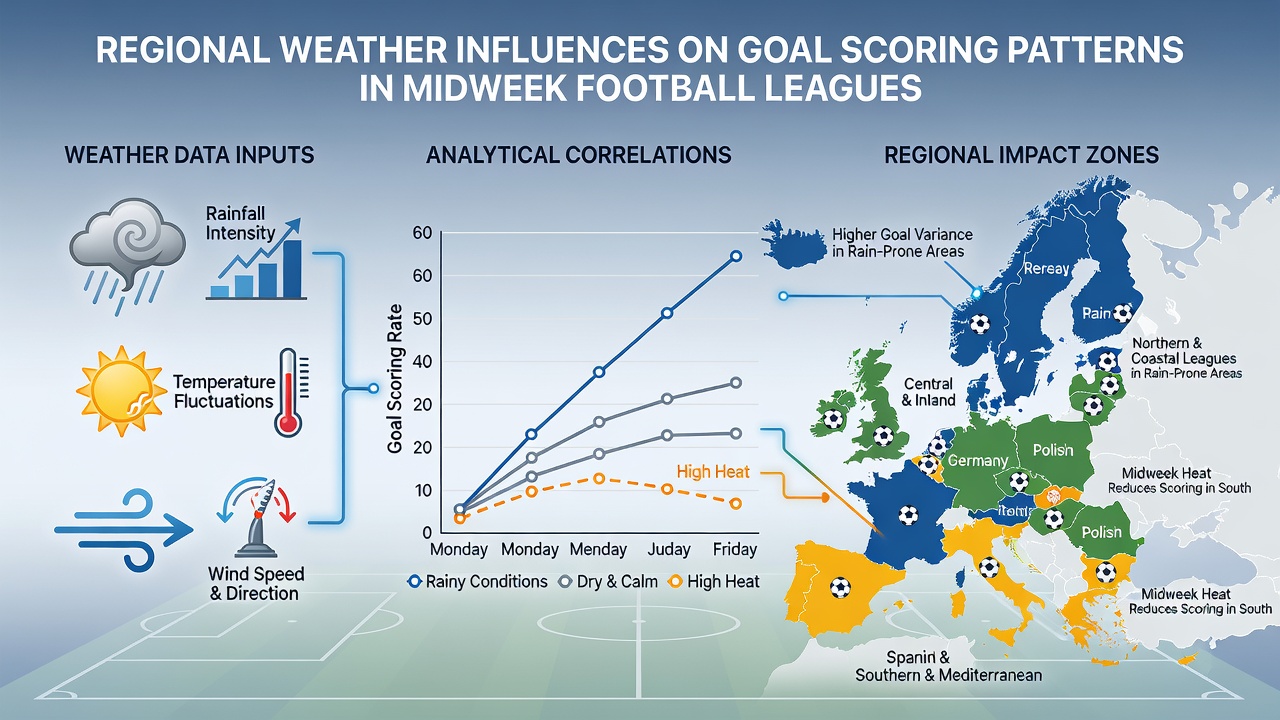
Observers note that humidity levels compound temperature effects in southern and tropical regions. Leagues in Brazil and parts of Australia experience higher humidity during their respective seasons, leading to documented reductions in total distance covered by players after halftime. These factors combine to produce lower-scoring midweek encounters when both heat and moisture rise simultaneously.
Combined Weather Factors in Specific League Case Studies
Combined weather variables produce distinct scoring signatures in different regions. In the French Ligue 2, where midweek fixtures occur regularly during autumn, simultaneous rain and moderate wind reduce total goals by an average of 1.1 per game based on records spanning five seasons. Canadian Soccer Association reports on similar combined conditions in North American professional leagues during spring months show parallel drops in offensive output. Researchers at European sports analytics centers have cross-referenced these findings with satellite weather data to isolate each variable's contribution.
Teams in midweek competitions often face travel across climate zones within the same week, which introduces additional variables. Matches between northern and southern clubs during transitional weather periods demonstrate wider variance in goal numbers than intra-regional fixtures. Figures from the UEFA club competitions database illustrate this spread in away goal statistics when teams move between markedly different weather environments.
Data Sources and Measurement Approaches
National meteorological agencies and academic research groups supply the primary datasets used in these analyses. The Australian Bureau of Meteorology and Environment and Climate Change Canada both publish granular weather records that sports analysts integrate with match statistics. European organizations such as the Royal Netherlands Meteorological Institute provide comparable coverage for northern leagues. These sources allow researchers to align exact kickoff conditions with goal timing and match events rather than relying on daily summaries alone.
Statistical models built from these combined datasets continue to refine predictions for upcoming midweek schedules, including those scheduled for the 2026 season.
Conclusion
Regional weather conditions produce measurable and repeatable effects on goal scoring in midweek football leagues. Rainfall, wind, temperature, and humidity interact differently across geographic zones, leading to distinct patterns in northern versus southern and coastal versus inland competitions. Data compiled from multiple national agencies and league records confirm these influences operate consistently across seasons and provide a factual basis for understanding variations in match outcomes.