23 Aug 2026
Topographical Features Impacting Sprint Results at Doncaster's Town Moor
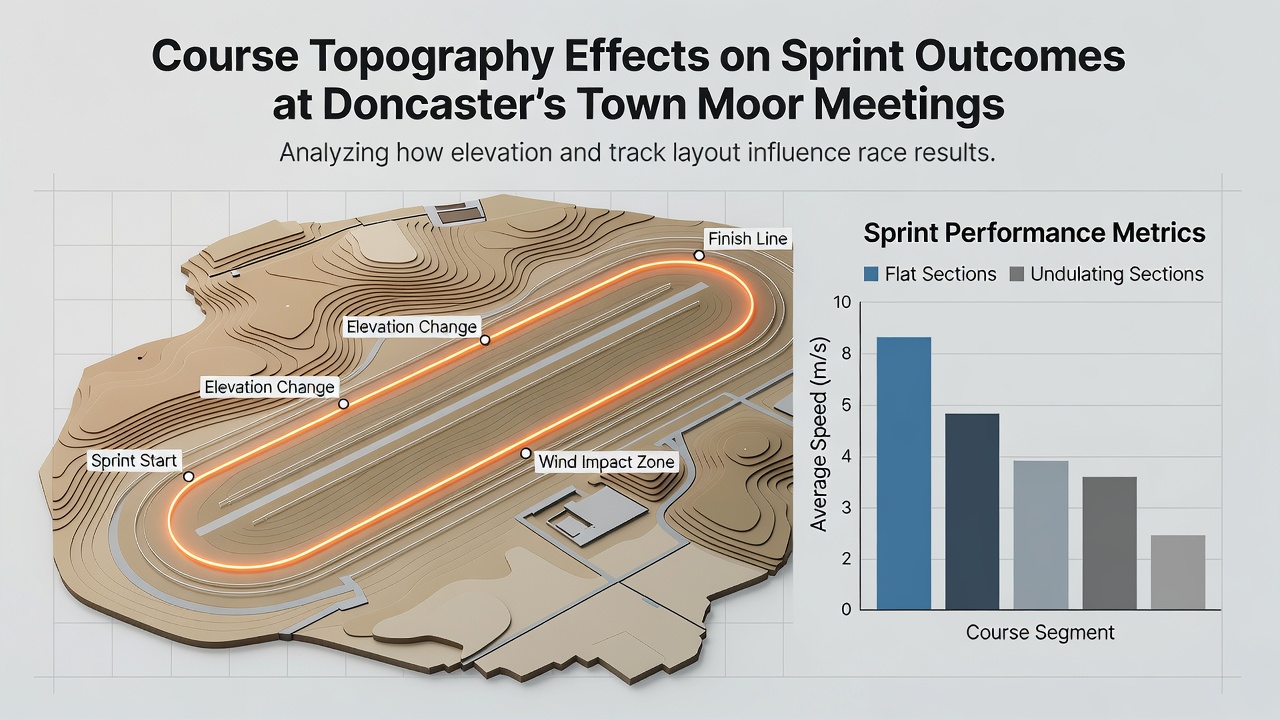
Doncaster Racecourse sits on the expansive Town Moor and features a straight six-furlong sprint track that runs across relatively level ground yet incorporates subtle gradients and camber changes that influence how horses manage their effort during the final stages of a race. Historical records from the British Horseracing Authority show that sprint times vary noticeably when surface conditions interact with these minor elevation shifts, particularly during the September meetings when ground can range from good to soft.
Observers note that the initial two furlongs present a slight downhill component that allows early speed to build quickly, while the middle section levels out before a gentle rise approaches the finish line. Data collected over multiple seasons indicates that horses drawn on the far side often benefit from a straighter run that avoids some of the camber pull, whereas those racing nearer the stands side must contend with a slight banking effect that can affect stride rhythm in the closing stages.
Ground Conditions and Elevation Interactions
Soil composition at Town Moor includes a mix of clay and sand layers that drain differently across the sprint strip, creating patches where moisture retention alters traction. Studies from the Racing Foundation have documented how these variations combine with the course's modest undulations to produce measurable differences in stride length during the final 200 yards. When rainfall occurs in the days before a meeting, the lower-lying sections near the five-furlong marker retain water longer, which can slow momentum for horses attempting to quicken through that zone.
Trainers have long adjusted preparation routines to account for these patterns, with many focusing on stamina-building exercises on undulating gallops elsewhere to prepare runners for the late-stage effort required at Doncaster. Figures from past fixtures reveal that favourites win at a slightly lower rate in sprints when the ground softens, suggesting that the topography amplifies the challenge of maintaining balance under tiring conditions.
Wind Exposure Across the Straight
The open nature of Town Moor leaves the sprint course exposed to prevailing winds that sweep across the flat landscape. Meteorological records from the Met Office indicate that gusts from the southwest can add resistance over the final furlong, especially when races take place in late summer. Horses that conserve energy through the middle section often show improved finishing positions on windy days because the headwind effect compounds the demands of the gentle uphill finish.
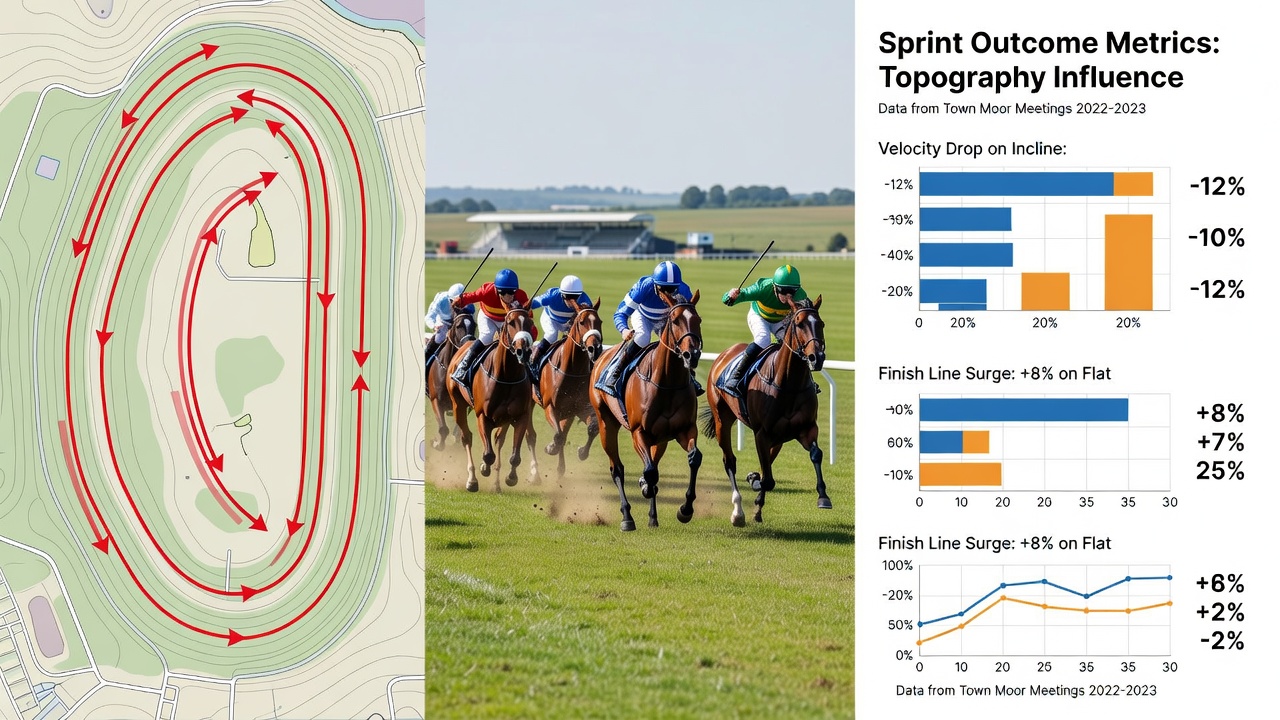
Those who have analysed sectional timing data note that tailwinds produce the opposite outcome, allowing faster overall times but sometimes leading to early burn-out if the jockey fails to restrain early speed on the initial downhill section. August 2026 fixtures are scheduled to include several five-furlong contests where wind forecasts will likely play a larger role in pre-race assessments by connections.
Stall Positioning and Terrain Effects
Starting positions influence how quickly horses reach the optimal racing line relative to the camber. Low-numbered stalls near the stands rail place runners on the more pronounced banking area for the first half of the sprint, which can require additional effort to stay balanced. High-numbered stalls offer a straighter trajectory yet place horses farther from the eventual racing line that develops as the field converges toward the centre of the track.
Analysis of results from the past decade shows that winners emerge from a broad range of draws, yet the combination of stall position and ground conditions produces clearer patterns during softer going. Trainers who prepare horses on similarly cambered training tracks report better adaptation when those runners encounter the Town Moor sprint layout.
Conclusion
Course topography at Doncaster Town Moor creates measurable influences on sprint outcomes through the interaction of subtle gradients, camber, drainage variations, and wind exposure. Records maintained by industry organisations continue to provide the data necessary for connections to refine preparation and race tactics accordingly. As meetings progress through 2026, these established patterns remain central to understanding performance across the straight sprint distances.