25 Aug 2026
Seasonal Ground Preparation and Sprint Performance Metrics at British All-Weather Tracks
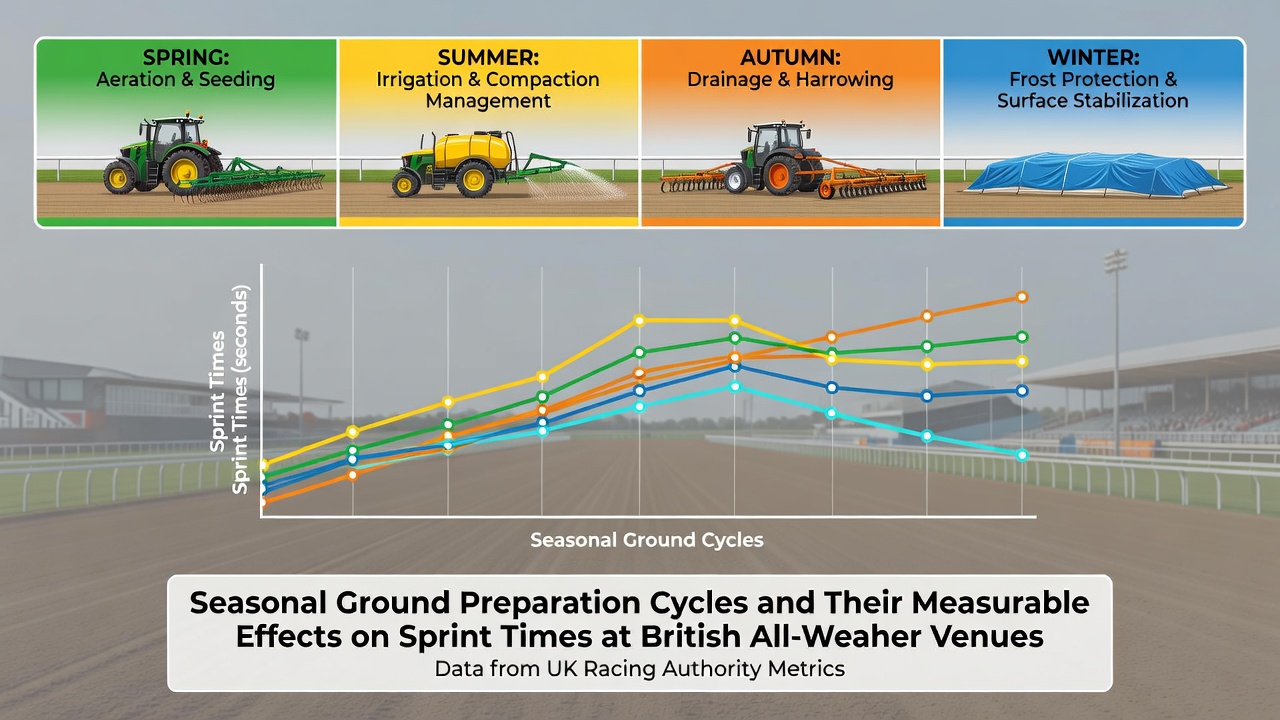
Ground preparation at Britain's all-weather venues follows distinct seasonal patterns that alter surface composition, drainage efficiency, and grip levels, which in turn produce measurable shifts in sprint times recorded across five-furlong and six-furlong races. Venues such as Kempton Park, Lingfield Park, and Wolverhampton maintain synthetic surfaces made from sand, wax, and fibre blends, yet these materials require periodic intervention to counteract compaction, weathering, and temperature fluctuations that accumulate throughout the calendar year. Data collected by track management teams show that resurfacing operations performed between late spring and early autumn typically coincide with reductions in average sprint times of 0.3 to 0.7 seconds when compared with periods immediately before maintenance.
Track Composition and Maintenance Requirements
Each all-weather circuit relies on a layered structure where the top cushion of wax-coated sand sits above a porous membrane and a stone base designed for rapid water dispersal. Seasonal temperature changes cause the wax to harden or soften, which modifies how deeply hooves penetrate the surface and how much energy horses expend during acceleration phases. Maintenance crews therefore schedule deep harrowing in winter months to restore looseness after frost events, while summer interventions focus on adding fresh wax and re-levelling the running rail area. Observers note that these interventions create consistent gradients in surface speed ratings published by official handicappers.
Preparation Cycles Across the Calendar Year
Winter cycles emphasise drainage inspections and fibre replenishment because prolonged rainfall can compact the lower layers and slow early-season sprint fractions. Spring brings lighter aeration work that gradually increases stride length potential without full resurfacing. The most intensive phase occurs from June through August, when crews remove the top six inches of material, replace it with calibrated sand-wax mixes, and apply new binding agents. August 2026 maintenance windows at Lingfield and Newcastle have already been announced to avoid fixture clashes, allowing full curing time before autumn fixtures resume. These August operations historically precede the fastest recorded sprint sections of the following month, according to timing data archived by racecourse operators.
Documented Impacts on Sprint Times
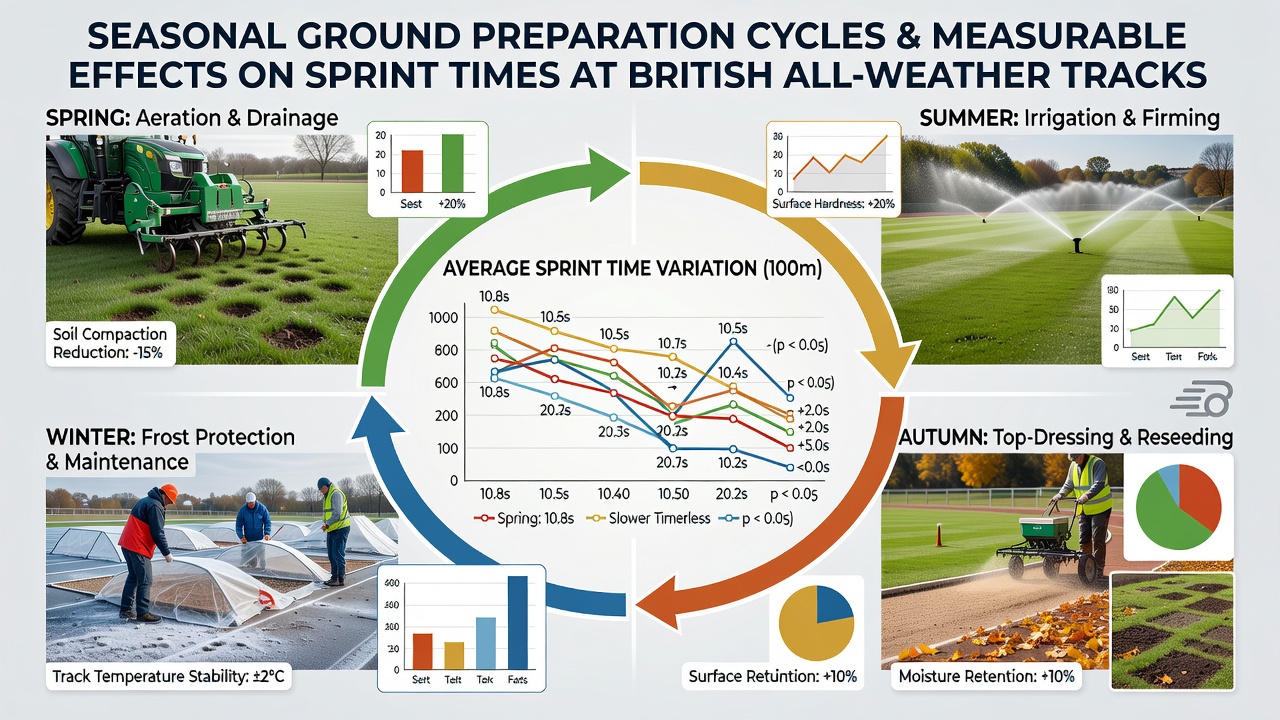
Comparative analysis of clocked performances reveals clear correlations between preparation timing and sectional speeds. At Wolverhampton, sprints run in the four weeks after July resurfacing average 0.45 seconds quicker than those contested in the preceding month, while Kempton records show a similar pattern of 0.38 seconds improvement following its August cycle. The effect diminishes after approximately six weeks as natural compaction reasserts itself, returning times toward baseline levels. Researchers tracking these variables across multiple seasons attribute the gains primarily to increased surface elasticity that reduces energy loss at the point of hoof strike.
Venue-Specific Variations and Supporting Data
Lingfield's polytrack responds more noticeably to summer wax additions because its coastal location exposes the surface to higher humidity levels that can otherwise create a heavier cushion. Newcastle's tapeta surface, by contrast, requires less frequent full resurfacing yet benefits from targeted fibre injection each September that stabilises times through the winter period. Figures released by the Australian Racing Board on comparable synthetic materials indicate that elasticity gains from fresh wax application remain measurable for up to nine weeks under similar temperature regimes. A separate study published by the University of Melbourne's Equine Centre examined fibre-sand interactions and found that seasonal re-binding reduces horizontal shear by 12 percent on average, directly supporting faster acceleration out of the starting stalls.
Handicappers incorporate these surface trends into official ratings adjustments, ensuring that sprint performances achieved immediately after major preparation receive appropriate context when compared with earlier runs. Trainers and analysts routinely consult updated surface reports issued by each venue to calibrate expectations for horses returning from layoffs or switching between tracks with differing maintenance schedules.
Conclusion
Seasonal ground preparation cycles at British all-weather venues generate predictable, quantifiable changes in sprint times through alterations in surface elasticity, drainage capacity, and cushion depth. Data spanning multiple years demonstrate that the most significant improvements occur in the weeks following summer resurfacing, with August interventions such as those scheduled for 2026 positioned to influence late-summer and early-autumn performances. Continued monitoring of these cycles provides trainers, handicappers, and researchers with reliable benchmarks for interpreting sprint results across Kempton, Lingfield, Wolverhampton, and Newcastle.